

AI is infecting just about everything we do, and then came agentic AI. AI agents can write code, triage software bugs, organize cloud infrastructure, book vacations, and negotiate services. However, the modern agent hits a wall when it needs to purchase something.
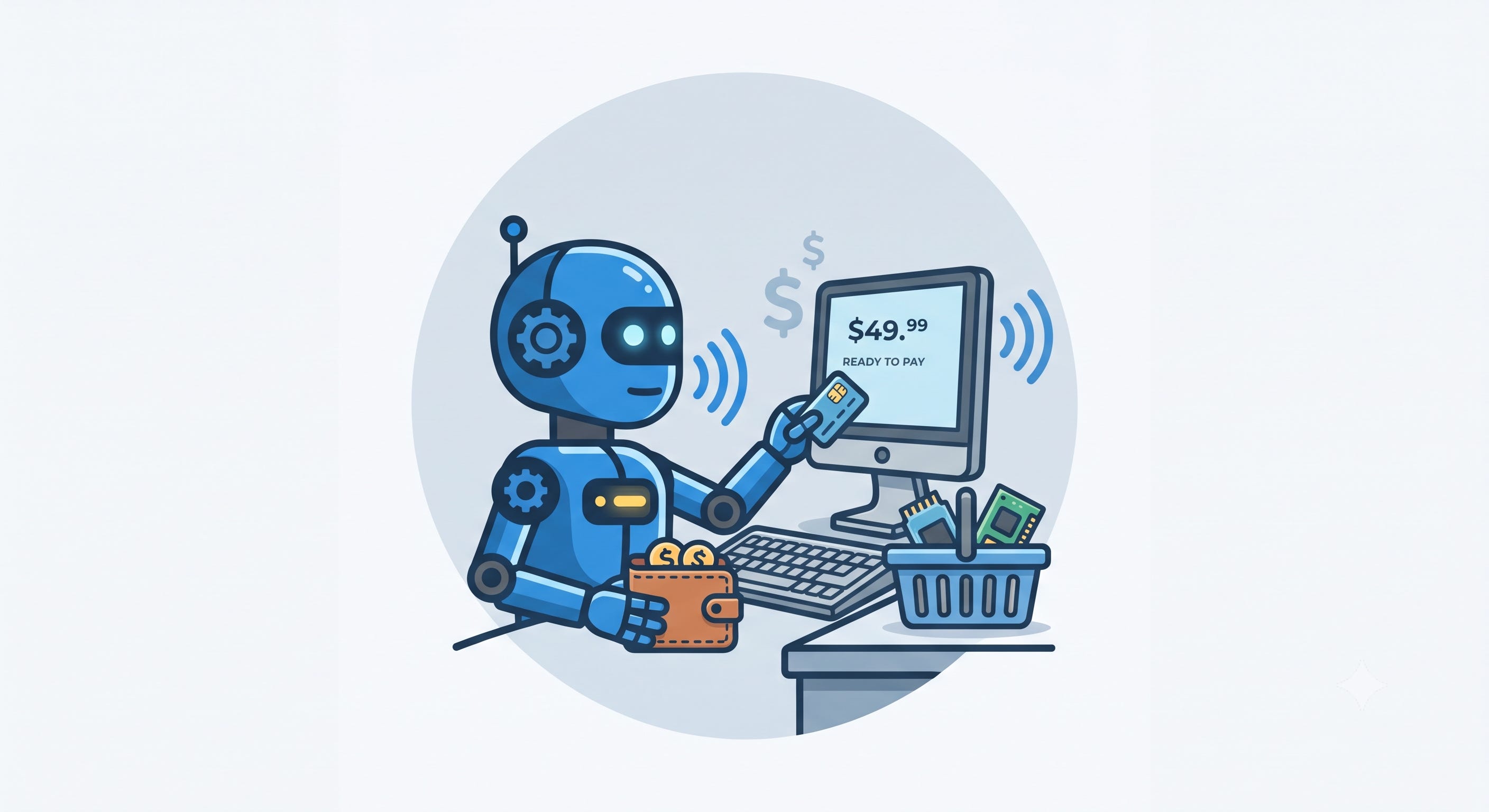
Imagine an AI agent negotiating with a supplier, purchasing a few seconds of computing power, and completing the transaction without ever asking a human to approve a credit card charge. Then imagine that same agent entering a team chat, working with other people and machines, and leaving behind a verifiable record of every decision it made. That may sound futuristic, but the technologies needed to make it possible are just starting to arrive.
Surprisingly, some of the most important pieces are coming from the convergence of two worlds rarely discussed simultaneously: enterprise communications and crypto.
I find crypto technologies fascinating, and anyone who has attempted to study them knows that crypto is a rabbit hole. The more you learn about crypto and Bitcoin, the more you realize how much you don’t know. Why is there inflation? Why is there a Fed? What is fiat currency today than its predecessors? Why do currency exchange rates constantly change? Etc. They are tough questions because few of us received any education on these matters.
We are watching UCaaS (Unified Communications as a Service) and CCaaS (Contact Center as a Service) platforms adapt to AI in numerous ways. Agents are increasingly viewed as team members, not tools or utilities. I see AI, comms, and crypto intersecting in many ways, but here, I want to focus on agentic wallets and Team Chat.
Enterprise comms and payment systems were engineered around human identity. To unlock the multi-trillion-dollar potential of the agentic web, enterprise rails will be completely reimagined for machines.
Wallets and the KYC Dilemma
Traditional payment rails like credit cards, ACH, and wire transfers were not designed for machine-to-machine interactions:
Transaction Fees: Standard credit card networks charge roughly 2% to 3% plus a flat fee of around $0.30 per swipe. That fee structure breaks down completely when an AI agent needs to make thousands of micro-transactions averaging $0.001 to purchase a single second of compute.
The KYC Dilemma: Legacy financial systems rely on Know-Your-Customer (KYC) compliance. The system was designed for human customers, which requires things like a driver’s license or SSN. An AI agent cannot pass a traditional KYC check because it is not a human.
Programmatic Rails: How Crypto Wallets Bridge the Gap
To solve this, financial infrastructure providers and crypto networks are building native programmatic rails. Instead of requiring human identity, crypto wallets substitute KYC with programmatic guardrails:
Code as Identity: Security shifts from who is paying to what logic signed the transaction (cryptographic proofs and smart contract constraints).
Autonomous Guardrails: AI payment agents use single-use tokens or isolated enclave keys with hard-coded parameters—enforcing strict spending caps, rate limits, and pre-approved merchant lists.
High-Throughput Settlement: Modern high-speed blockchains process and settle thousands of transactions per second for fractions of a cent.
Protocol 402
In the early days of the internet, web architects set aside the HTTP status code 402 Payment Required to serve as a native payment mechanism for web traffic. For decades, code 402 sat largely dormant while Web2 commerce relied on centralized accounts, human checkout pages, and credit card gateways.
That changed with x402, an open payment protocol developed by Coinbase and now governed under the Linux Foundation alongside partners like AWS, Cloudflare, Stripe, and Visa.
Autonomous Wallets in The Wild
Building directly on this HTTP-native payment layer, Coinbase introduced Agentic Wallets that provide AI agents the ability to spend, earn, and trade digital assets without human approvals. The wallets are non-custodial and secured through Trusted Execution Environments, ensuring that private keys remain isolated from the agent’s language model and prompts. Agentic Wallets allow software entities to hold funds and initiate payments, as long as they operate within predefined rules. This changes the role of payments from a user-triggered action to an embedded operational capability.
For the payments industry, this revives long-discussed but rarely successful models such as micropayments and real-time usage billing. The difference is that agents are not constrained by user experience or cognitive overhead. They can evaluate pricing dynamically, execute payments instantly, and switch providers without friction. This places new demands on payment rails to support high-frequency, low-value transactions with predictable costs and near-instant settlement.
Stripe has also embraced agentic commerce by allowing developers to issue virtual, single-use payment cards linked to strict API parameters. An enterprise agent assigned to book vendor services or provision cloud capacity can spin up a sandboxed Stripe virtual card pre-loaded with an exact spending limit.
Decentralizing Team Collaboration
For years, enterprise team chat platforms (like Slack, Microsoft Teams, and Webex) have operated as walled gardens. When organizations integrate AI into these platforms, they traditionally treat agents as crude bot integrations or wrap them in restrictive OAuth tokens pinned to human permission structures. This model limits agents to acting as passive assistants rather than true collaborative peers.
A shoe dropped this month that deserves attention. Block (the financial company founded by Jack Dorsey of Twitter) announced Buzz, an enterprise collaboration platform built on Nostr.
Nostr (Notes and Other Stuff Transmitted by Relays) is an open, decentralized messaging protocol. In Nostr, message identity and routing are decoupled. Instead of signing up with an email address or a directory account managed by a third party, every human or AI agent user is identified by a cryptographic public key for identity, and a private key for signing actions.
In Buzz, an AI agent isn’t an external webhook wrapped in a slash-command. It holds its own cryptographic private key. It can join channels, participate in discussions, review code repositories, execute automated workflows, and trigger financial transactions as an independent actor. Every message sent, code change submitted, or task executed by an agent (or human) is cryptographically signed. This creates an immutable record that proves exact provenance: which prompt, which logic, and which agent executed an action.
Portable Reputation
In traditional enterprise software, trust is tied to a centralized directory: you are either inside the company’s Slack instance, or you are outside of it. With Nostr, human or agentic users might interact with dozens of external vendors, platforms, and internal Team Chats with a single identity. Users build an unforgeable track record over time. Every task completed, every pull request merged, and every payment settled is signed by its private key and posted across open relays. Its identity isn’t a verified corporate email address; it is a verifiable history of executions.
Enterprise permissioning moves from “Does this bot belong to our domain?” to “Does this cryptographic identity have the verified history and smart contract backing to execute this task?” Reputation becomes portable, verifiable, and more permanent than a company badge.
Crypto is Coming to Enterprise Comms
These are just two examples; crypto is going to be playing a much bigger role in enterprise comms, finance, and identity. When you combine agentic crypto wallets (programmatic micro-payments without KYC) with decentralized comms protocols like Nostr (sovereign identity and tamper-proof interaction), you see the foundational architecture of the Agentic Web falling into place.
For a long time, enterprise IT leaders viewed crypto as a solution with no problem. But when viewed through the lens of autonomous systems, the narrative flips entirely: crypto will provide the native operational and financial infrastructure designed for both humans and machines.
This shift is something enterprise leaders should actively welcome:
Safety Through Cryptographic Guardrails: Crypto rails force a model of granular, programmable permissions. Every dollar spent and every action taken is bounded by explicit smart contracts.
Breakdown of SaaS Silos: Moving enterprise communications onto open protocols like Nostr stops vendor lock-in.
True Auditability: Cryptographic signing guarantees complete transparency. You will always know who—or what—initiated an action.
The future workforce consists of autonomous software agents that sign transactions, verify payloads, and collaborate across decentralized networks. There’s more coming. There’s a tremendous amount of work being done by the big banks around the world to legitimize and leverage crypto technologies, including Bitcoin.
Up Next
David Danto and I speculate about possible M&A in our industry. Catch that discussion on Monday’s UC Weekly news. Then Danto will be attending the AV/IT summit in Manhattan. I am working on use cases that highlight SIM-based mobility and intend to publish a Report ($) soon on Industry Analyst events.
Check out our recent conversation with Microsoft Teams CVP Ilya Bukshteyn.
Our first new monthly Insider Report on AV ($) (CX monthly coming).